


آمیرزا
4.8641.00 Reviews
App Specs
- Version
- 12.1
- Updated On
- License
- Free
- Downloads
- 10,000,000+
- Developer
- Brain Ladder Game Studio
- Categories
- Word
- Platform
- Android
Screenshots
 Analysis by AppCompare
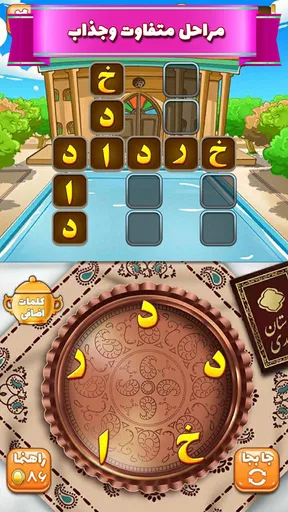
I like word games that give me a clear little goal without demanding a long stretch of attention, and آمیرزا fits that kind of break well. Its Persian letter puzzles ask you to make words from a set of letters, so each round begins with a simple question: what can I build from what I have? That easy starting point makes it approachable, while the language itself gives the challenge a distinct character.
Small goals make starting easy
The early appeal is the tight loop between seeing the letters, trying combinations, and spotting a word that fits. I can pick it up for a short pause rather than needing to remember a complicated story or manage several systems at once. When I find a solution, the reward is immediate and understandable: I have made progress by noticing a word I missed a moment ago.
That structure suits a commute, a quiet coffee break, or a few minutes waiting for someone. I would treat it as a focused puzzle rather than background entertainment, because the useful part is looking at the letters and thinking through possible Persian words. If I am distracted or trying to play while doing something else, I am more likely to overlook a solution and turn a relaxing break into a frustrating one.
What progress feels like
Moving through levels gives the game a reason to continue beyond a single solved puzzle. The changing challenges offer a simple progress signal: I have cleared one task and can see another ahead. That sense of forward motion is more motivating than an endless jumble with no visible destination, especially for players who enjoy finishing small goals one by one.
The game is free, and Brain Ladder Game Studio is the developer. Its broad reach is reflected in more than 10 million installs and a 4.7 average from around 71,000 ratings. Those figures suggest that the format has found a large audience, but they do not guarantee that every player will enjoy Persian wordplay. I would use them as context, not as a substitute for deciding whether the language and puzzle style suit me.
A practical tip is to give a stubborn puzzle a brief reset before reaching for a hint. I look at the letters again, try a different starting point, and check whether I am fixating on one familiar word. That pause can make the answer easier to see and keeps hints useful for genuine sticking points rather than routine guesses. The game does offer hints, which can help when a level stops feeling like a fair test and starts feeling like a wall.
Challenge, language, and friction
The difficulty rises as I progress, giving the game a reason to keep asking for another attempt. That escalation can be satisfying for someone who likes vocabulary puzzles, but it also means the relaxing opening does not define every later session. If I want a game that stays effortless, or one that never asks me to pause and rethink a letter combination, this may not be the right fit.
Worth Reading Before You Choose

Switching to Android Auto Means Rethinking Your Driving Routine

Google Calendar Makes a Crowded Week Easier to Manage

Baby Panda World Brings Quick Play to Modern Phones, but Its Game Library Feels Busy

ESPN’s Live Game View Makes Following Close Games Easier

QuizzLand Review: A Good Fit for Short Trivia Breaks, Not Every Player

Basketball Stars: Multiplayer Is Fast, but Can It Recover When Matches Go Wrong?
Persian is central to the experience, not a decorative theme around a language-neutral puzzle. That makes it especially appealing to Persian speakers and to learners who are comfortable treating unfamiliar vocabulary as part of the challenge. For someone who cannot read Persian, the same quality becomes the main barrier: hints may help with a puzzle, but they do not replace understanding the language. A language-neutral word search or a puzzle in a language I already know would be a better choice in that case.
Compared with a crossword, the game’s letter-building focus puts more weight on forming words from available characters than on interpreting clues. Compared with an open-ended word search, its level progression gives each session a clearer finish line. I find that combination useful when I want a quick, defined task; I would choose a crossword instead when I want clue-solving, or a broad vocabulary game when I want to explore words without a level-by-level path.
Keeping play enjoyable
A realistic way to play is to open it during a short wait, solve a level or two, then stop when attention starts to fade. That boundary matters because puzzle games can make “one more” feel tempting, while a difficult word can also keep me staring longer than I planned. I get more enjoyment from returning with a fresh look than from forcing an answer after the puzzle has stopped being fun.
The game is listed for everyone and is free to download. Its current version is 11.8, and it runs on Android 5.1 or later. It was released on April 25, 2019, and has 713 reviews alongside its ratings. I would still check that my device meets the minimum system requirement before installing, especially if I use an older Android phone.
There is a useful trade-off in the hint option: it reduces the chance of being completely stuck, but using help too quickly can take away the satisfaction of finding the word myself. I would save hints for levels where repeated attempts are no longer teaching me anything. That approach keeps the central activity—the process of noticing and testing words—at the heart of play.
Getting Hooked on Word Play
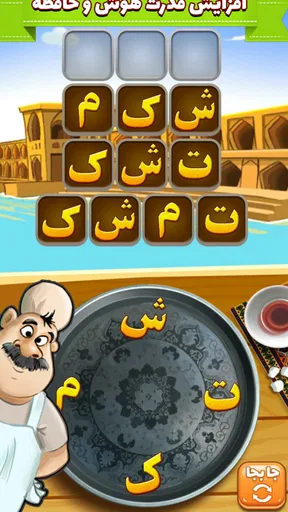
From the moment you download آمیرزا, you’re in for a treat. The game kicks off with an easy introduction to its mechanics – connecting letters to form words. Simple, right? But don’t let that fool you! As you progress, the puzzles ramp up in difficulty, keeping you on your toes and constantly guessing.
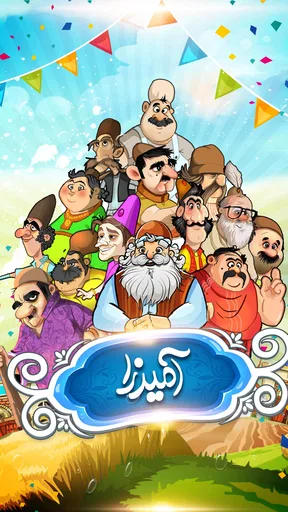
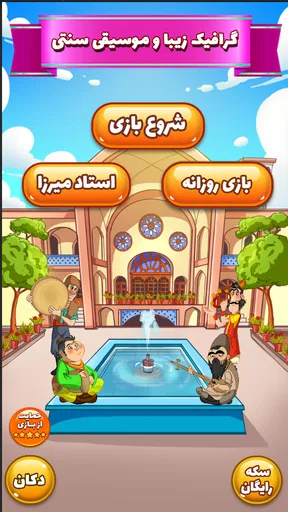
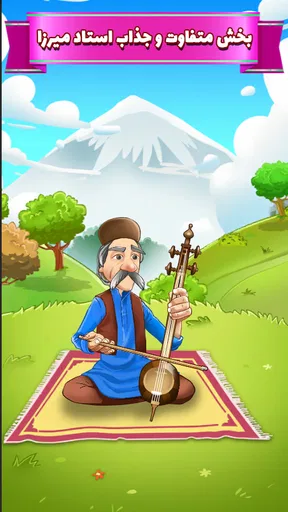
One of the first things I noticed was how visually appealing the game is. The interface is clean and colorful, which makes the gameplay all the more engaging. Plus, the sound effects are pretty catchy, adding a nice touch to the overall experience.
The Journey Through Levels
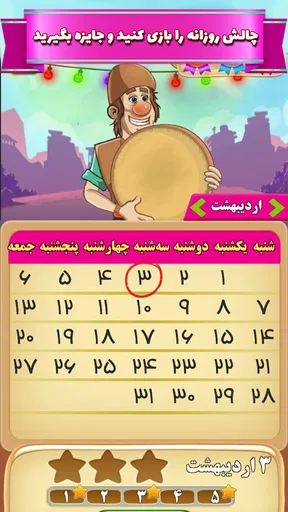
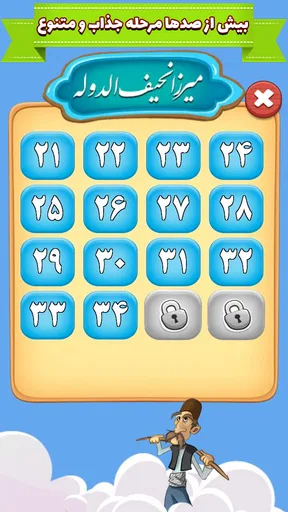
The game features numerous levels, each with its own unique set of challenges. As you navigate through these levels, you encounter a variety of puzzles that require a mix of quick thinking and a good vocabulary. I found myself eagerly anticipating what the next challenge would be, which is a testament to how addictive it can feel.
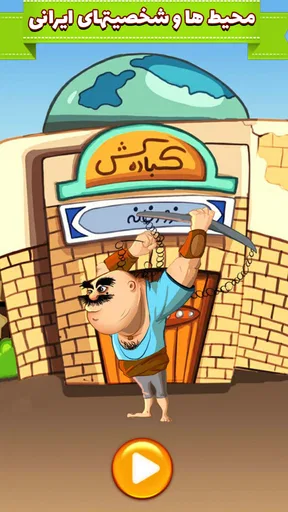
Another charming aspect is the cultural touch the game incorporates. It's not just about forming words; it’s an opportunity to dive into a linguistic adventure that gives you a taste of Persian language nuances. For language enthusiasts like myself, this adds an extra layer of enjoyment.
Why You’ll Love It
If you’re a fan of word games, this is definitely one to try. It’s not just about the challenge; it’s about the satisfaction of finding that elusive word and the little "aha!" moment that follows. It’s the kind of game where you can easily lose track of time, yet feel like you’ve accomplished something after each session.
The game also offers hints for when you’re stuck, which is a lifesaver during those particularly tricky levels. And let’s be honest, we all hit that roadblock sooner or later!
A Few Thoughts on Usability
As much as I enjoyed playing it, it’s worth mentioning that the game is primarily in Persian. While this adds a unique charm, it might be a slight hurdle for those who aren’t familiar with the language. However, if you’re up for a challenge and willing to learn, this could be a fun way to pick up some new vocabulary.
The app runs smoothly on both Android and iOS, and I didn’t encounter any major bugs or glitches during my playthrough, which is always a plus in my book.
Who It Suits—and Who Should Pass
I would recommend it most readily to Persian speakers who already enjoy rearranging letters and working through bite-size language puzzles. It also makes sense for a learner who can read Persian and wants a playful reason to revisit vocabulary. I would not choose it as my first Persian-learning tool: a puzzle can expose me to words, but it is not a substitute for structured lessons, explanations, or practice speaking and listening.
If I were introducing it to a friend, I would suggest trying a few levels with no pressure to finish a long session. That gives a fair sense of whether the letter combinations feel satisfying or whether the language barrier gets in the way. The key question is not simply whether someone likes word games; it is whether Persian is a language they can engage with, or are actively curious about.
It is also better suited to someone who enjoys a clear answer and a defined level than to a player who wants an open creative word sandbox. The available hints soften difficult moments, but they do not change that basic design. If I want free association, broad clue variety, or a puzzle that does not depend on Persian vocabulary, I would pick another type of word game.
A sensible way to handle a hard level
When I hit a puzzle that will not yield, I try not to cycle through random guesses indefinitely. I scan the letter set from a different direction, form shorter possibilities first, and then reconsider how those pieces might combine into a longer answer. This is a useful habit for keeping the puzzle-solving active rather than turning each attempt into a blind tap.
I also separate “I do not see it yet” from “I do not know this word.” The first can often be solved with a pause and a fresh look; the second may be a language-learning gap, and a hint can help me move on without pretending I have learned the word. If vocabulary growth is the goal, I would make a note of unfamiliar answers and review them later using a learning resource that explains meaning and usage.
That distinction helps set expectations. Solving a level can feel like a small win, but not every win means I have gained a durable piece of vocabulary. The game is strongest as a puzzle first, with language exposure as an extra benefit for players who can make use of it.
How it fits into a day
On a typical busy day, I might open it while waiting for a meal or sitting through a short delay. I can focus on one puzzle, stop when I reach a natural break, and return later without needing to follow a complicated plot. If the level turns out to be tougher than expected, I can either leave it for another moment or use a hint; neither choice needs to spoil the session.
For shared play, I would treat it as a conversational puzzle rather than assume everyone can contribute equally. A Persian-speaking friend can suggest possibilities while someone else looks for letter patterns, but the person unfamiliar with the script may have little to do unless the group is willing to explain the words. It works best as a shared activity when everyone has enough Persian knowledge to participate, or when the goal is simply to watch and learn.
That makes the game’s portability more about convenience than constant access. I like that its small, self-contained challenges suit spare moments, but I would not rely on it to entertain a group with mixed language backgrounds. For that, a clue-based party game or a language-neutral puzzle is easier to bring everyone into.
What the progression does well
Its level-based structure gives effort a visible destination without requiring me to turn every session into a marathon. I can enjoy the satisfaction of finishing a challenge and decide whether I have the attention for another. The growing difficulty also gives experienced word-puzzle fans something to work against, though a rising challenge is only rewarding while the vocabulary feels fair to the player.
That is where the game’s audience matters. A Persian speaker may experience a tricky level as a satisfying test of observation, while a learner may find the same puzzle difficult for two separate reasons: spotting the arrangement and recognizing the words. I would not interpret a slow level as a lack of puzzle skill if the vocabulary itself is unfamiliar.
For me, the best rhythm is to use hints sparingly, stop before frustration takes over, and return with fresh attention. The structure supports short bursts, but the temptation to keep pushing can work against that strength. A good stopping point is part of enjoying a word game, not a failure to finish.
Wrapping It Up
So, would I recommend it? Absolutely. It’s a charming, engaging, and slightly addictive word puzzle game that offers both entertainment and a bit of a brain workout. Whether you’re a seasoned puzzle aficionado or just looking for something fun to pass the time, this app is definitely worth a download. Just be warned – once you start, it might be hard to put down!
Ready to dive into this world of words? You can find it in your respective app store and start your adventure today. Happy puzzling!
Pros
- Engaging puzzles keep you entertained.
- Culturally rich with Persian themes.
- Regular updates with new levels.
- User-friendly interface and controls.
- Promotes cognitive skills and vocabulary.
Cons
- Limited to Persian language users.
- In-app purchases can be costly.
- Ads can interrupt gameplay.
- Requires persistent internet connection.
- Limited social media integration.
FAQs for آمیرزا
What is the main objective of the game آمیرزا?
آمیرزا is a word puzzle game designed to challenge players' vocabulary and problem-solving skills. The main objective is to form words from a set of given letters, advancing through levels that progressively increase in difficulty. Players are tasked with finding all possible word combinations to complete each level.
Is آمیرزا suitable for all age groups?
Yes, آمیرزا is designed to be family-friendly and suitable for all age groups. Its simple mechanics and educational value make it a great choice for children and adults alike, fostering vocabulary development and cognitive skills in an entertaining way. Parents can confidently allow their children to play.
Does آمیرزا require an internet connection to play?
آمیرزا does not require an internet connection for gameplay, making it an excellent choice for playing on the go. However, some features like updates or in-game purchases may require connectivity. This offline capability ensures uninterrupted playtime whenever and wherever you choose.
Are there in-app purchases in آمیرزا?
Yes, آمیرزا includes optional in-app purchases. Players can buy hints or other helpful tools to assist them in progressing through more challenging levels. While these purchases can enhance the gaming experience, the game is fully playable without them, offering ample opportunities to earn rewards.
What platforms is آمیرزا available on?
آمیرزا is available for download on both Android and iOS platforms. Players can easily find and install the game from the Google Play Store or the Apple App Store. Its compatibility with a wide range of devices makes it accessible to a broad audience of mobile users.


